
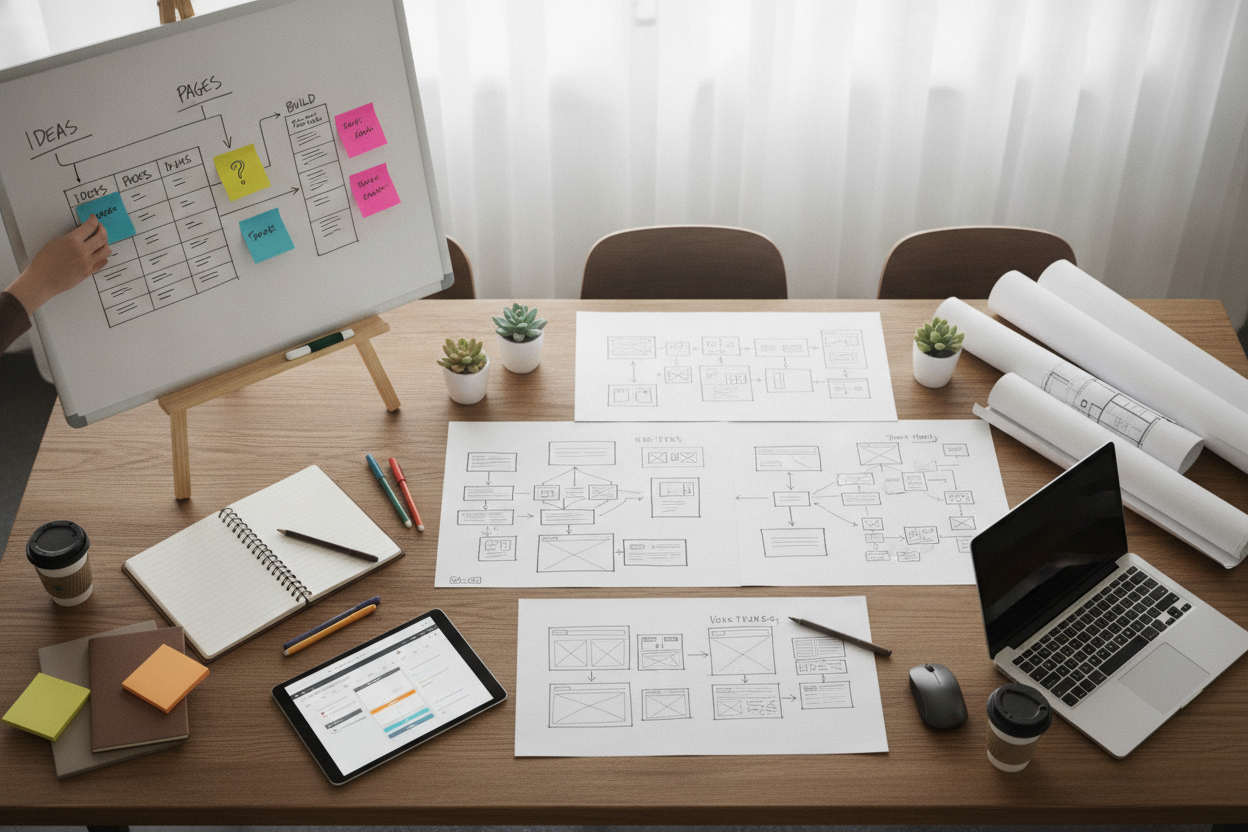
Before you write code, it helps to know exactly what you are building. A clear planning workflow saves time, reduces confusion, and keeps your website aligned with its purpose. Whether you are creating a blog, a portfolio, or a landing page, planning gives you a roadmap before the first line of HTML is written.
Start by defining the goal of the site. Ask what visitors should do when they land on the page. Then think about the content that supports that goal. A homepage, about section, contact area, or blog list may all play different roles, but each one should serve a clear purpose. This kind of thinking leads to better structure and better user experience.
Next, sketch the layout. You do not need a polished design right away. A rough wireframe is enough to show where navigation, main content, and calls to action should sit. This stage helps you spot missing pieces before development starts. It also makes it easier to estimate how much work the project will require.
Once your plan feels solid, move into building with confidence. A strong workflow keeps your project focused and makes revisions easier later. Good planning may not seem exciting at first, but it is often the difference between a website that stalls and one that gets finished.
Leave a Reply